HISTORIAN | ANALYST | AUTHOR
Adrian Calamel is a Middle East historian, terrorism analyst, author, and international media commentator specializing in Iran, Hezbollah, state-sponsored terrorism, and the historical forces shaping today’s conflicts.
After more than a decade teaching Middle Eastern history, modern terrorism, and the Arab-Israeli conflict at the university level, he left academia to bring historical context and analysis to a broader audience. Today, his work spans international television, policy research, writing, and public commentary on some of the world’s most consequential security challenges.
10+ Years
University Teaching
International
Media Commentary
Author
Books & Research
Policy
National Security Engagement
LATEST MEDIA
Analysis & commentary on Iran, Hezbollah, terrorism, the Middle East, global security
Selected international television appearances and analysis on Iran, Hezbollah, terrorism, and Middle Eastern security.
Strategic Implications of a Post-Khamenei Iran
International Television Commentary • WION News • June 2026
Analyzed the strategic implications of a potential post-Khamenei Iran, explaining why encouraging defections within the regime is likely to be more effective than broad de-Ba’athification-style policies. Examined the structure of Iran’s military, security, and economic institutions and assessed the implications for regional stability during a potential political transition.
Strategic Implications of Fuad Shukr’s Elimination
International Television Commentary • WION News • Aug. 2024
Examined how the elimination of Fuad Shukr affected Hezbollah’s leadership and deterrence, explained Israel’s multi-front war since October 8, and placed Shukr’s role within Hezbollah’s history, including his connection to the 1983 U.S. Marine Barracks bombing.
Iran’s Nuclear Strategy After the 12-Day War
International Television Commentary • NewsX • Feb. 2026
Analyzed the strategic environment following the 12-Day War, including stalled U.S.–Iran nuclear negotiations and the growing American military presence in the region. Examined U.S. demands regarding uranium enrichment and explained why a regime capable of enriching and reprocessing uranium without pursuing weaponization would be historically unprecedented. Also discussed the regime’s efforts to divert international attention from its nuclear program and its record of domestic repression, including the mass killing of thousands of Iranians in the weeks preceding the interview.
CURRENT WORK & RESEARCH
Books, investigative research, and historical analysis examining terrorism, Iran, Hezbollah, and the evolution of state-sponsored threats beyond the Middle East.
COMPLETED MANUSCRIPT
Lies in Lockerbie
More than three decades after the bombing of Pan Am Flight 103, fundamental questions surrounding the attack remain contested. Drawing on more than a decade of research, Lies in Lockerbie re-examines the investigation, prosecution, geopolitical context, and competing theories surrounding one of the deadliest terrorist attacks against Americans. The book challenges the conventional account and asks whether the evidence ultimately points in a different direction.
MANUSCRIPT IN PROGRESS
Hezbollah: Iran’s Global Terror Network
From Hezbollah’s emergence in Lebanon under the guidance of Iran’s Islamic Revolutionary Guard Corps to the development of operations spanning the Middle East, Europe and the Americas, this book traces the organization’s evolution through the terrorist campaigns that shaped it. Drawing on completed research and a manuscript well underway, it examines major bombings, hostage-taking and hijacking campaigns, assassinations, and international operations while reconstructing the command, personnel and operational relationships connecting Hezbollah to the IRGC.
MANUSCRIPT IN PROGRESS
Iran, Hezbollah and the Buenos Aires Bombings
Tracing the 1992 bombing of the Israeli Embassy and the 1994 AMIA attack in Buenos Aires, this project examines the convergence of Iranian strategic interests and Hezbollah operations in Latin America. It explores Argentina’s nuclear relationship with Iran, Hezbollah’s losses in Lebanon, the planning and coordination behind the attacks, and the development of Iranian and Hezbollah networks across South America. The book then follows the troubled AMIA investigation through prosecutor Alberto Nisman’s renewed inquiry, his allegations involving senior Argentine officials, and his controversial death on the eve of congressional testimony.
AREAS OF EXPERTISE
Historical context and strategic analysis for understanding the forces shaping today’s conflicts.
IRAN & THE IRGC
Iranian strategy, state institutions, influence operations, nuclear policy, and the Islamic Revolutionary Guard Corps.
HEZBOLLAH & PROXY NETWORKS
Hezbollah’s history, leadership, terrorist operations, global networks, and operational relationship with Iran and the IRGC.
STATE-SPONSORED TERRORISM
The use of terrorism, covert operations, proxy organizations, and transnational networks as instruments of state policy.
MIDDLE EAST HISTORY
Historical context behind contemporary conflicts, political movements, regional rivalries, and the modern Middle East.
TERRORISM & POLITICAL VIOLENCE
The origins, organization, motivations, strategy, and evolution of modern terrorism movements and political violence.
ISRAEL & REGIONAL CONFLICT
Israel, Iran, Hezbollah, and the historical and strategic forces shaping contemporary conflict across the region.
ADVISORY & STRATEGIC SERVICES
Independent analysis and strategic guidance on Iran, Hezbollah, terrorism, political risk, and Middle Eastern security.
Tailored for corporations, government agencies, policy professionals, advocacy organizations, and institutions navigating complex geopolitical and security environments.
THREAT ANALYSIS & STRATEGIC FORECASTING
Custom assessments of geopolitical developments, emerging threats, terrorist networks, and potential scenarios affecting organizations and decision-makers.
POLICY & GOVERNMENT ADVISORY
Independent analysis and strategic guidance for policymakers, government professionals, and institutions addressing Iran, terrorism, political violence, and Middle Eastern security.
POLICY BRIEFINGS & EXECUTIVE PRESENTATIONS
Private briefings and presentations for leadership teams, policymakers, conferences, institutions, and other professional audiences on geopolitical developments, terrorism, Middle Eastern security, and their strategic implications.
ADVOCACY & POLICY STRATEGY
Research and subject-matter guidance for advocacy organizations and policy initiatives, including issue analysis, legislative education, strategic messaging, and engagement with policymakers and other stakeholders.
Advisory engagements, briefings, and research can be customized to specific organizational, policy, or strategic needs.
POLICY & RESEARCH
Selected research and policy work applying historical and regional expertise to contemporary issues involving Iran, terrorism, and international security.
INTERNATIONAL POLICY RESEARCH
France 2050 — Iranian Entryism Report
Authored Chapter 9 of the multi-author France 2050 report, examining Iranian influence and entryism in France and the West, including intelligence networks and activities connected to the 2015 JCPOA negotiations.
Presented to senior French government leadership, including the President of the Senate, President of the National Assembly, and Minister of the Interior.
U.S. POLICY ENGAGEMENT
Iran Policy & Congressional Engagement
Contributed research and analysis supporting advocacy surrounding the MAHSA Act, including material incorporated into congressional outreach and policy discussions concerning Iran and U.S. sanctions policy.
Participated in meetings with congressional staff and policy stakeholders addressing Iran, sanctions, and accountability measures targeting senior Iranian leadership.
SPEAKING & MEDIA
Historical perspective and strategic analysis for conferences, institutions, professional audiences, and international media.
KEYNOTES & CONFERENCES
Keynotes, conference presentations, and panel discussions on Iran, Hezbollah, terrorism, Middle Eastern security, and the historical forces shaping contemporary conflicts.
PRIVATE & EXECUTIVE BRIEFINGS
Focused briefings for organizations, institutions, and professional audiences seeking historical context and expert analysis of current geopolitical and security developments.
MEDIA COMMENTARY
Television, radio, podcast, and print commentary on Iran, Hezbollah, terrorism, Middle East history, state-sponsored threats, and regional conflict.
ABOUT ADRIAN
HISTORIAN | ANALYST | AUTHOR
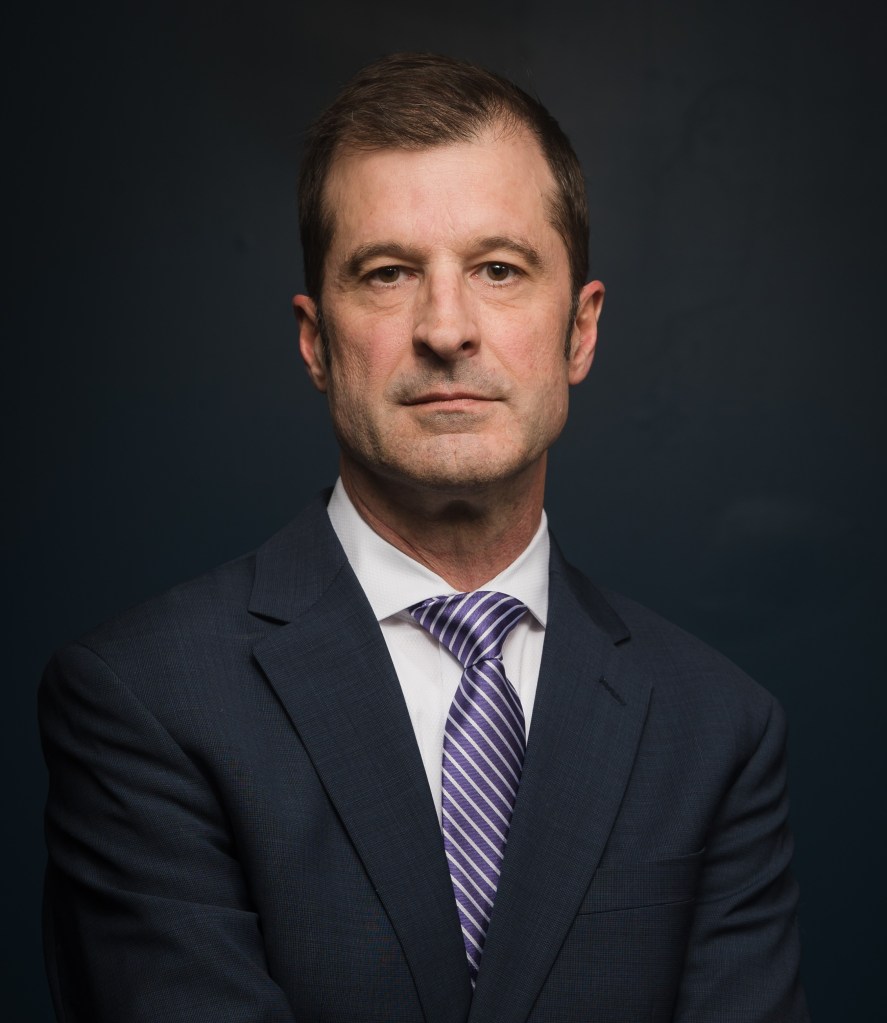
Adrian Calamel
Adrian Calamel is a Middle East historian, terrorism analyst, author, and international media commentator whose work focuses on Iran, Hezbollah, state-sponsored terrorism, and the historical forces shaping contemporary conflict.
His approach is grounded in the belief that today’s security challenges cannot be fully understood without examining the history, ideology, organizations, and political decisions that produced them. His research has taken him from the classroom and long-form historical scholarship to policy engagement, international media analysis, and advisory work.
Calamel’s interest in terrorism and Middle Eastern history became deeply personal after losing a close friend in the South Tower on September 11, 2001. That experience ultimately shaped a career devoted to understanding terrorist movements, the states and networks that support them, and the policies developed in response.
He holds a master’s degree in Middle Eastern history and has taught university courses on Middle Eastern history, terrorism, the Arab-Israeli conflict, women and Islam, and related subjects. Today, he brings that historical foundation to research, policy discussions, media commentary, speaking engagements, and strategic analysis.
CONTACT ADRIAN
Available for media commentary, speaking engagements, research, and strategic advisory work.
For interview requests, speaking opportunities, research collaborations, or advisory inquiries, please get in touch
EMAIL ADRIAN | LINKEDIN | X
ADRIAN CALAMEL
Historian | Terrorism Analyst | Author
© 2026 Adrian Calamel. All rights reserved.
© 2026 Adrian Calamel. All rights reserved.


